

It doesn’t always seem like this rapid of an evolution is happening in mobile connectivity. Yet here we are. But esim news has evolved from a niche feature into something that is subtly upending people’s habits when it comes to purchasing phones, switching carriers and staying connected while traveling.
Some aspects of it aren’t smooth. Some sections feel of the future. Others are stuck in 2012.
If you’ve heard whispers about it and are wondering what’s really been going on, this is where things stand now — and where they’re headed next.
eSIM News Today: The Transition Is No Longer Voluntary
If you stroll into an electronics retailer today and grab a new flagship phone, there’s a solid chance you won’t see so much as a SIM tray. That’s not a preview anymore. It’s reality.
In markets such as the U.S., some models are already eSIM-only. Other parts of the world are catching up, albeit more slowly.
What’s the kicker though: users aren’t actually being asked if they want this change. It’s just happening.
A friend who had recently upgraded his phone figured he would just move his SIM like usual. Instead, they were scanning QR codes and waiting on a carrier app to turn on. It worked—but it felt unfamiliar.
That’s the pattern right now. Functional, but not always intuitive.
eSIM News In Brief: September 2025 >> Adoption Is Not a Straight Line, but Friction Still Exists
Zooming out, the year 2025 was when eSIM finally crossed into the mainstream.
More carriers support it. More devices depend on it. Travel eSIM apps are everywhere. On paper, everything looks ready.
But in practice, friction hasn’t gone away.
Switching between devices is not entirely reliable. Some carriers allow you to transfer eSIM in just a few minutes. Others require you to reach out for support or verify your identity multiple times.
It’s not a dealbreaker, but it’s definitely noticeable.”
And, if you’re among those who upgrade phones on the regular, the little annoyances pile up.
Japan eSIM Development: Silent Expansion With Edge
Japan has a relatively more stable approach to eSIM. Adoption isn’t meteoric, but steady.
Where it gets interesting is tourism.
More and more travelers visiting Japan are turning to eSIM instead of pocket Wi-Fi or local SIM cards. It’s just easier. Load before your flight, touch down and you’re online.
Local carriers have begun to respond with improved eSIM onboarding of their own, though it’s still not the speediest system around.
Japan sounds like a preview of stable, gradual adoption — less hype, more practicality.
China eSIM Updates: It Still jumps through hoops, it still controlled
China counts among the more restrictive environments for eSIM.
The support is there, but it’s regulated. Not all devices have the option of activating eSIM locally, and its process isn’t anywhere near as open or flexible as in other regions.
This creates a strange scenario for travelers. You could have an eSIM that works for roaming data, but local integration is limited.
It’s a reminder that eSIM isn’t merely about the technology — it’s also about the policy.
And in China, policy moves slower than hardware.
Verizon eSIM News: Making It Easier, But Not Without Some Risks
Verizon claimed eSIM activation had improved significantly.
A lot of what used to require a visit to a store can now be managed through their app. Moving from device to device is a bit easier than it was just a couple of years ago.
But it’s not flawless.
There are still some edge cases where activation hangs or needs to be manually intervened. And if something breaks during the transfer, you’re probably dealing with support rather than doing it yourself.
So yes, it’s better. Just not effortless yet.
eSIM News: Apple Is Paving the Way (Like It or Not)
Apple didn’t merely embrace eSIM — they dictated the terms.
The removal of the SIM tray in select markets forced carriers and consumers to pivot rapidly. And, of course, the rest of the industry is following suit even if they won’t say so outright.
Apple’s strategy is straightforward: less hardware, more software control.
For users, that translates to a cleaner design and simpler setup / most of the time. But that also means less flexibility if you prefer control by touch.
Apple rarely waits for consensus. This is another example of that strategy unfolding in real time.
News /GSMA eSIM: Standardization Is Evolving
The GSMA works hard behind the scenes to define how eSIM should work worldwide.
Their standards specify how profiles are moved, managed and transferred between devices and carriers.
The good news: these standards are getting better. Remote provisioning is more streamlined, while cross-device transfers become more consistent.
The less exhilarating truth: standardization is a slow process.
And so while the underpinnings are getting stronger, the user experience still relies heavily on individual carriers to get things right.
News from Nomad eSIM: Travel Connectivity Competition
Nomad is among a burgeoning crop of travel eSIM providers vying for travelers around the world.
What has changed is pricing and flexibility. Plans are becoming more competitive, and coverage is accelerating.
But not every service is created equal.
Some prioritize speed. Others prioritize cost. Some are routing the traffic in ways that can affect latency.
If you ever had the frustration of using a travel eSIM to make video calls and noticing slight lags, this is why.
Still, the convenience is well worth any trade-offs for most travelers.
Recent eSIM News: Dual Profile, Multi-Network Usage
One of the less-obtrusive but more useful developments is multi-profile support.
Phones can now hold multiple eSIMs and easily switch between them — or even run two at the same time.
That enables real-world use cases.
A remote worker might maintain a home carrier for calls but use a cheaper in-country data plan when abroad. Or a freelancer could divide work and personal lines without having two to carry around.
It’s not flashy, but it is actually useful.
T-Mobile eSIM Update: Lightning Fast Setup, Rare Bugs
T-Mobile has embraced eSIM with more straightforward activation.
In many cases, it is also possible to create a new line directly from the device without scanning anything. That’s a big step forward.
But the same is true of others; it’s not flawless.
Activation bugs continue to spring up from time to time — especially after device or plan swaps. When it works, it’s smooth. When it fails, it can be frustratingly opaque.
AT&T eSIM News: Incremental Progress, Same Old Challenges
AT&T’s eSIM adoption has been slow and steady.
The support exists and is getting better, but it does not always seem current. Some processes still depend on steps that feel like they’re carried over from the physical SIM days.
It gets the job done. It simply does not seem all that smooth.
And that’s the story across many carriers — they’re adapting, just not innovating.
Android eSIM: Backstory and Broadening Quickly
eSIM support is now common on Android devices, including everything from premium models to mid-range phones.
The subject of the experience varies by manufacturer, though.
Some have basic setup flows that are neat and simple. Others bury eSIM settings in menus that require some hunting.
But in all, Android is rapidly gaining ground — and even sometimes bringing more versatility than its rivals.
That means improved dual-SIM management and wider device compatibility between regions.
Apple iPhone eSIM in News: Going Completely in Digital Direction
On iPhones, eSIM doesn’t feel even like an option so much as the way forward.
Setup is tightly coupled with the system, The latest process is smoother between iPhones than cross-platform.
But that advantage of the ecosystem has its price. If you step outside it — moving to Android, say — the process can become more complicated.
It’s smooth … so long as you don’t stray out of the lane.
The Broader Industry Movement Behind The Telecom eSIM News
Zoom out far enough, and eSIM is not only about phones.
It’s becoming part of the core telecom infrastructure.
Cars, tablets, smartwatches and laptops are all leaning on eSIM more and more to connect. For manufacturers, it simplifies logistics. It offers new service models for carriers.
And for users, it gradually normalizes the idea that connectivity is a feature to design in instead of something to graft on later.
That change is subtle, but it’s important.
The eSIM News October 2025: A Momentum that Never Slowed Down
When looking back 2025 toward late 2023, one key observation stands out: there was no momentum stall.
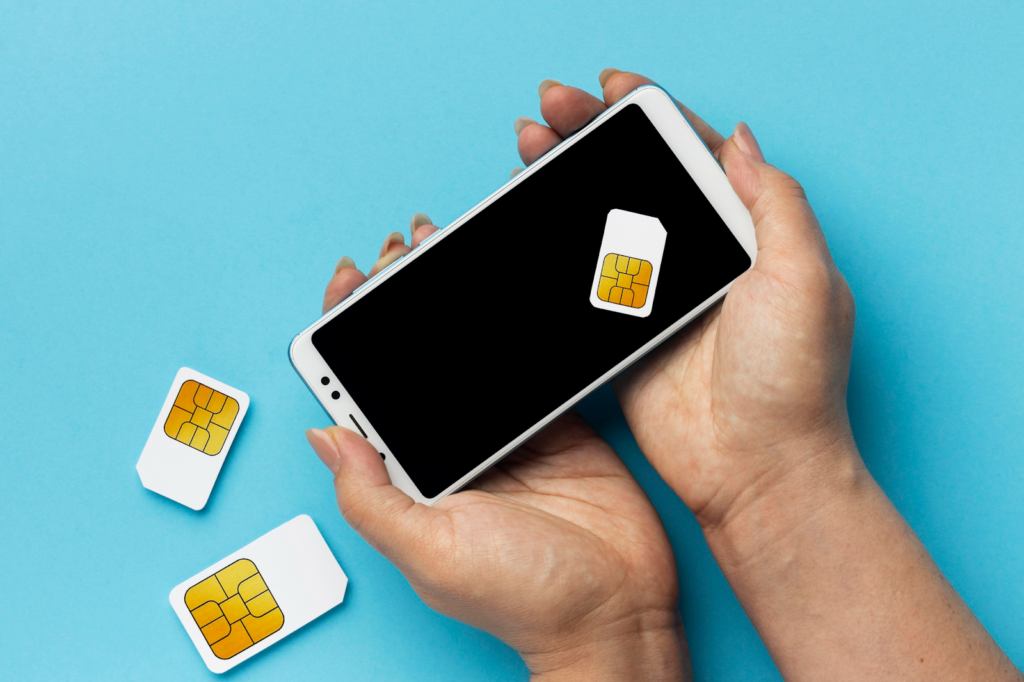
The launch of new devices also helped push eSIM forward. Travel adoption surged. Carriers improved, even if unevenly.
What did not occur was a major backlash.
There was resistance, sure. But not enough to bring the transition to a halt.
That gives you a sense of where this is going.
Latest iPhone eSIM News: Daily Life Is Getting Usual
For modern iPhone users, eSIM is simply a part of the setup process.
You power up your phone, respond to a few prompts and your number transfers over.
Once it works, most people don’t give it a second thought.
And that’s often the mark of a technology having crossed the threshold into normalcy — it ceases to be a feature and becomes invisible.
UAE eSIM News: Rapid Adoption in a Digital-First Environment
E-SIM has been picked up by the UAE in a swift method.
A large degree of smartphone penetration, solid telecom infrastructure and a populace that is accustomed to digital services all contribute.
Activation has been relatively straightforward there, too, because carriers have not been as fragmented as in other markets.
It’s one of the areas where eSIM doesn’t come across as much like a transition as it does the default.
Korea eSIM News: Cutting Edge Networks, Thoughtful Iteration
Even with its advanced mobile networks, South Korea has approached eSIM cautiously.
Support is expanding, but it hasn’t come quickly.
Some of that is about compatibility and high service standards. Changes are cautious when expectations are high.
No, adoption continues apace — it just lacks the hype.
Thailand eSIM News: Demand Fueled by Tourism
The eSIM growth we’re seeing in Thailand is driven by tourism.
Visitors prefer immediacy and app-based connectivity over fumbling with physical SIM cards after long-haul flights.
Both local providers and global eSIM apps have embraced this demand.
It’s yet another bit of evidence that travel is one of the largest drivers of eSIM use globally.
The Takeaway: Even if it’s not perfect, convenience is winning
eSIM isn’t flawless. It can be perplexing, sometimes maddening and at times inordinately reliant on carrier systems that aren’t quite fully modern.
But it’s still winning.
Because when it works, it’s actually easier. No tiny cards, store visits and No juggling trays at airport terminals.
It’s hard to resist that convenience.
And as the rough edges get smoothed—which they will—the balance tips even more.
So whether you’re prepared or not, eSIM has moved beyond the future. It’s even starting to affect how we connect now.

Hannan Sid is a passionate content creator and digital researcher specializing in emerging trends, technology, and online insights. He writes clear, engaging articles that simplify complex topics for everyday readers. His work focuses on delivering valuable, up-to-date information, helping audiences stay informed, inspired, and ahead in the fast-changing digital world.