
You’ve seen the photos. Children halfway through a laugh or wearing crumbs on the side of their faces. A pair dancing in the kitchen wearing socks. An infant nestled in a parent’s chest, blissfully unaware of the camera.
They don’t look staged. They don’t look forced. They seem like something you’ve experienced.
That’s lifestyle photography.
But once you dig beneath the surface, a more interesting question emerges: what exactly is a lifestyle photographer— and why are so many people opting for this style of photography instead of traditional portraits?
Let’s deconstruct it the way it would operate in real life.
Lifestyle Photographer What Makes Them Different
A lifestyle photographer captures people in a natural way at its most basic. But that definition is too tidy for what actually occurs.
They don’t merely arrive and click the shutter. They guide without controlling. They observe without disappearing completely.
Picture this. It is Sunday morning, and a family is at home. The children are constructing something messily on the floor. One of the parents is half-listening, half-drinking coffee. The light is hitting the window at just the right angle.
A lifestyle photographer might be inclined to say, “Why don’t you all sit a little closer together?” Then they step back.
They’re helping to shape the moment — but not to script it.
That balance is the job.
What Is Lifestyle Photography and Why It Feels Different
What is lifestyle photography, really?
It’s simply photography that aims at capturing life as it happens, though with enough intent that the “happening” is visually substantive. Not raw chaos, not stiff posing — something in between.
Here’s the thing. Life as we know it doesn’t always photograph great. Clutter, harsh lighting, awkward angles. So a lifestyle photographer tweaks aesthetics without overhauling authenticity.
Open a curtain. Clear a distraction. Suggest a simple activity.
Now the moment still feels real — but it looks like something you’d want to hang onto.
That’s the difference.
Candid Photography That Doesn’t Quite Feel Accidental
The term candid photography tends to be misinterpreted as “randomly taking photos.”
That’s not what’s happening here.
Fine candid family photography is deliberate. The photographer is waiting for responses, observes interactions, waits for that moment in time a second long where every thing falls into place — a laugh, a glance, an unnoticeable motion.
It may seem effortless, but it’s based on timing and awareness.
A toddler running toward their parent. Like an inside joke that becomes actual laughter. Those moments pass quickly. A lifestyle photographer anticipates them before they occur.”
Up Close and Docu-Style Photography Without the Distance
Documentary style photography relies on observation, a lot. No interference, no direction.
Lifestyle photography takes a cue from that, but has softer edges.
For his part, the photographer doesn’t remain entirely hands off; he pushes things along in a light-touch manner. “Walk this way.” “Sit here for a second.” “Do what you’d normally do.”
But you get that raw honesty of documentary style photography, but with a little more formality added to it to keep things visually strong.
It’s less strict than conventional portraits, but less passive than pure documentary work.
Natural Light Photography Sets the Tone
Suffused with natural light photography, an integral component of the lifestyle school.
No heavy flashes. No complicated setups. Just using what’s already there.
A window serves as your primary light source. A doorway creates depth. A cloudy day softens everything.
And it alters the feeling of the photos.
Soft light feels calm. Warm light feels intimate. Not even dim light on a floodlit field feels distant or emotional.
A lifestyle photographer is constantly moving people within that light — not a technical way, but more like a “stand here, this feels better.”
Unintended Portraits With an Intentional Feel
Unposed portraits don’t mean “careless” photos.
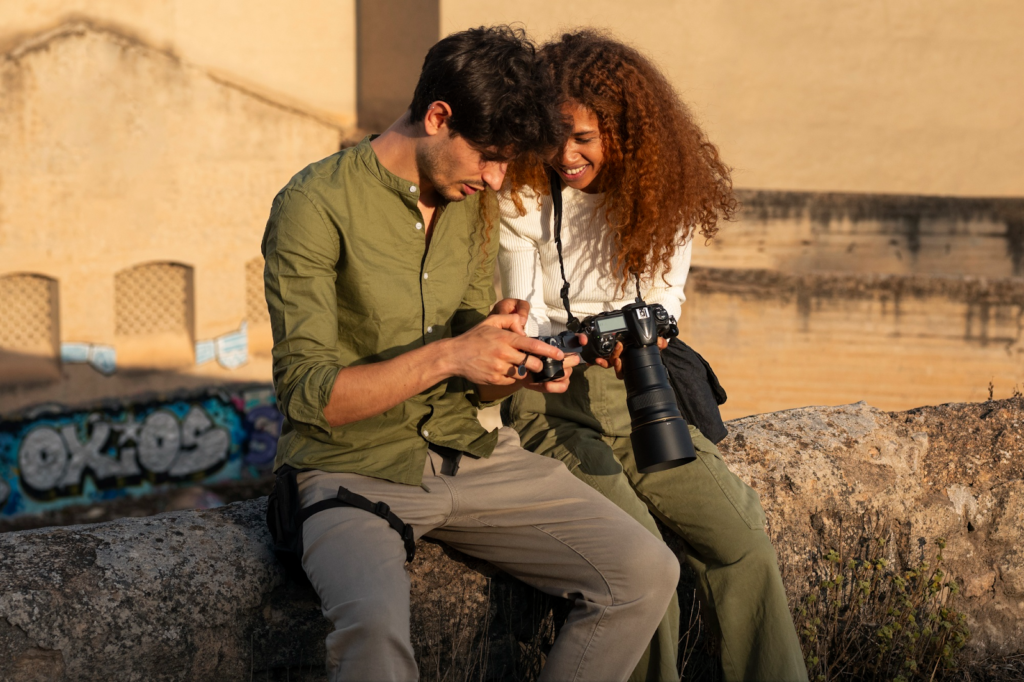
They say the pose isn’t what matters.
Rather than directing you to pose in a certain way, a lifestyle photographer might suggest that you, “Sit together and talk.” What comes out of that will not be the same for every family.
One might laugh. Another might sit quietly. Both are right.
The photographer frames the moment but doesn’t overdetermine it.
And this is why real family photos are often from this strategy — they show how people actually exist, not how they think they should appear.
The Idea of Artistic Family Photos, With None of the Overthinking
Artistic family photos need no dramatic backdrops or lush styling.
Often, small details are what lifts the image.
A reflection in a mirror. A shadow across the wall. The way a child leans into a parent without thinking.
These aren’t staged ideas. They’re noticed moments.
A lifestyle photographer learns to see composition everywhere, even in mundane situations. And that’s what brings a sense of reality along with visual interest to the photographs.
The images stick with you because of the emotional storytelling
At its highest calling, lifestyle photography becomes storytelling photography.
Not in a scripted sense — a sequence of emotional beats.
A quiet start. A burst of energy. A calm ending.
If you’re scrolling through emotional storytelling pictures, you’re not just witnessing what unfolds. You’re remembering how it felt.
Which is why these photos age beautifully. They’re connected to memory, not merely appearance.
Photography Style That Is Organic And Feels Like Life
An organic photography style is difficult to pretend.
You can’t manufacture chemistry between people. You can’t script genuine reactions.
You can make room for those things to occur.
That is what a casual photo shoot is all about.
No pressure to perform. No rigid expectations. A little guidance, enough to keep things flowing.
And in the moments people let their guard down, the mundane shots somehow feel significant.
The real differences between lifestyle vs posed photography
You get to know about lifestyle vs posed photography differences as soon as you experience both.
Posed photography gives you control. Everyone is placed, adjusted, perfected.
Lifestyle photography gives you movement. Things shift. People interact. Moments evolve.
Neither is wrong.
But if you’ve ever looked at a beautiful photo where everyone looks perfect and said “That doesn’t really feel like us, does it?” — then you see why lifestyle photography has captured the zeitgeist.
It trades perfection for personality.
8 Reasons You Need a Lifestyle Photographer for Your Family Photos
Wondering why you should hire a lifestyle photographer for family photos over the more traditional route?
Because life doesn’t stand still.
Kids change quickly. Dynamics shift. How your family feels now won’t be the same in a few years.
Lifestyle photography records that particular moment, not just what everyone looked like but how they related to one another.
It’s less about creating a perfect image and more about documenting something that exists.
Benefits of In-Home Family Photography
That’s why in-home photography sessions are hugely popular.
Home is where people tend to be their truest selves.
Kids are more relaxed. Parents are less stressed. Everything feels familiar.
Your home doesn’t have to be perfect yet. Actually, it’s better if it is not.
A lifestyle photographer can work with what’s there — find good light, simple backgrounds and natural pockets of interaction.
The result feels personal, in a way that a studio rarely manages.
Lifestyle Photography: Capturing Real Moments
It all begins with being patient and mindful, which ultimately is what the lifestyle photography will catch in real life moments.
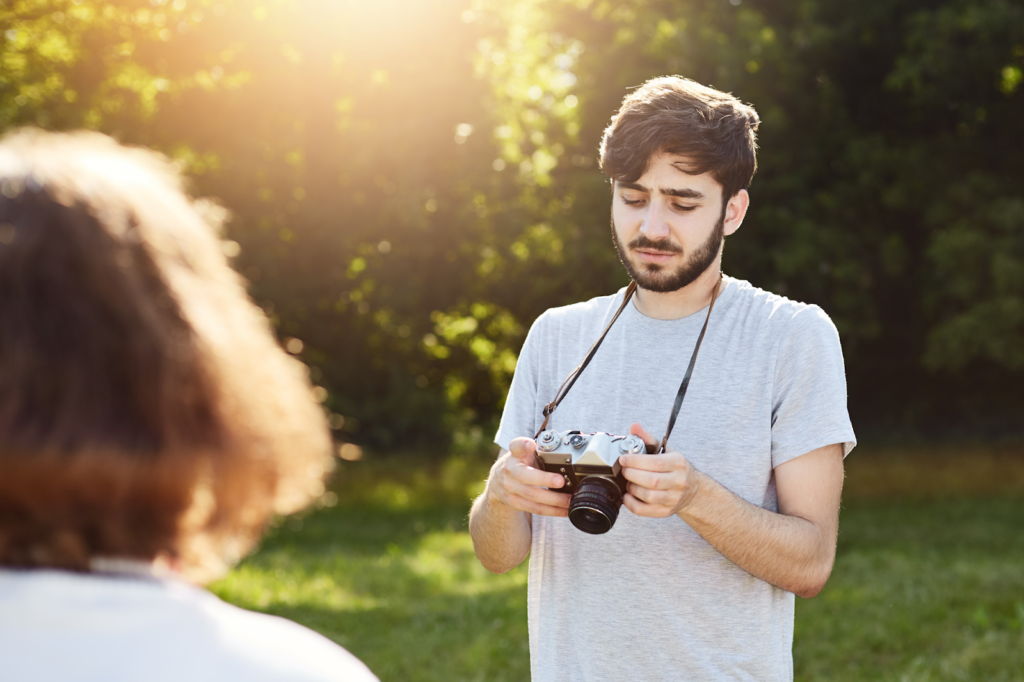
Moments aren’t forced—they’re noticed.
A glance across the room. A spontaneous hug. A second of chaos that becomes laughter.
These things happen quickly. Often when no one is trying.
A good lifestyle photog knows when to hang back and when to intervene just a little bit to keep the story moving.
At Home, Lifestyle Newborn Photography Takes on Another Dimension
In a way, lifestyle newborn photography at home is opposite to a conventional newborn shoot idea.
No heavy props. No complex posing.
The baby remains largely a passive agent — held, fed, comforted, transferred between parents.
It’s quieter. Slower. More intimate.
A lifestyle newborn photographer who prioritizes connection above perfection. The way a mom looks at her child. The tiny movements. The in-between moments.
Those details are more important than any setup.
Natural Family Photography Tips That Are Proven
No need for your natural family photography ideas to be complicated.
Think of simple, everyday activities.
Making breakfast together. Playing outside. Reading a book. Even something as simple as sitting on the bed talking.
It’s not about creating something original. It’s to photograph what already is.
Because those are the times you’ll actually want to remember.
The Family Lifestyle Photographer Who Grows With You
Family lifestyle photography is not a one and done for most.
It evolves.
What begins as a newborn session becomes toddler mayhem, then school-age energy, then quieter teenage years.
Each stage looks different. Each one has its own rhythm.
And recording that over time builds something far more substantial than a single stage-managed portrait.
Advantages of Lifestyle Photography that You Realize later
Lifestyle photography doesn’t always have immediate benefits.
You might initially figure, “These feel less formal,” he said.
But years later, something else stands out.
You know the vibe of that day. The way people interacted. Those little details you would have forgotten.
That’s the real value.
The camera and what truly makes a good photographer.
And when you hire a lifestyle photographer, you’re not simply paying for their technical ability.
You’re deciding how your life is recorded.
Do you wish for something more polished and controlled? Or something truthful and dynamic?
Lifestyle photography is more the second.
It doesn’t try to make your life what it isn’t. It observes what is already there — and records it in a way that feels true.
And those are, at least in the end, usually the photos that people keep around longest.
FAQs
What do lifestyle photographers do?
They capture natural, candid moments of people in real-life settings, focusing on genuine emotions and everyday interactions.
What are lifestyle photography examples?
Family moments at home, parents with a newborn, kids playing, or couples enjoying daily routines in a relaxed environment.
What are the qualities of a lifestyle photographer?
They’re observant, patient, creative, and good at making people feel comfortable to capture authentic moments.
How to become a lifestyle photographer?
Start by practicing candid photography, build a portfolio, learn natural lighting, and promote your work online.
What type of photographer makes the most money?
Commercial, fashion, and wedding photographers often earn the most due to high demand and premium clients.
Hannan Sid is a passionate content creator and digital researcher specializing in emerging trends, technology, and online insights. He writes clear, engaging articles that simplify complex topics for everyday readers. His work focuses on delivering valuable, up-to-date information, helping audiences stay informed, inspired, and ahead in the fast-changing digital world.