
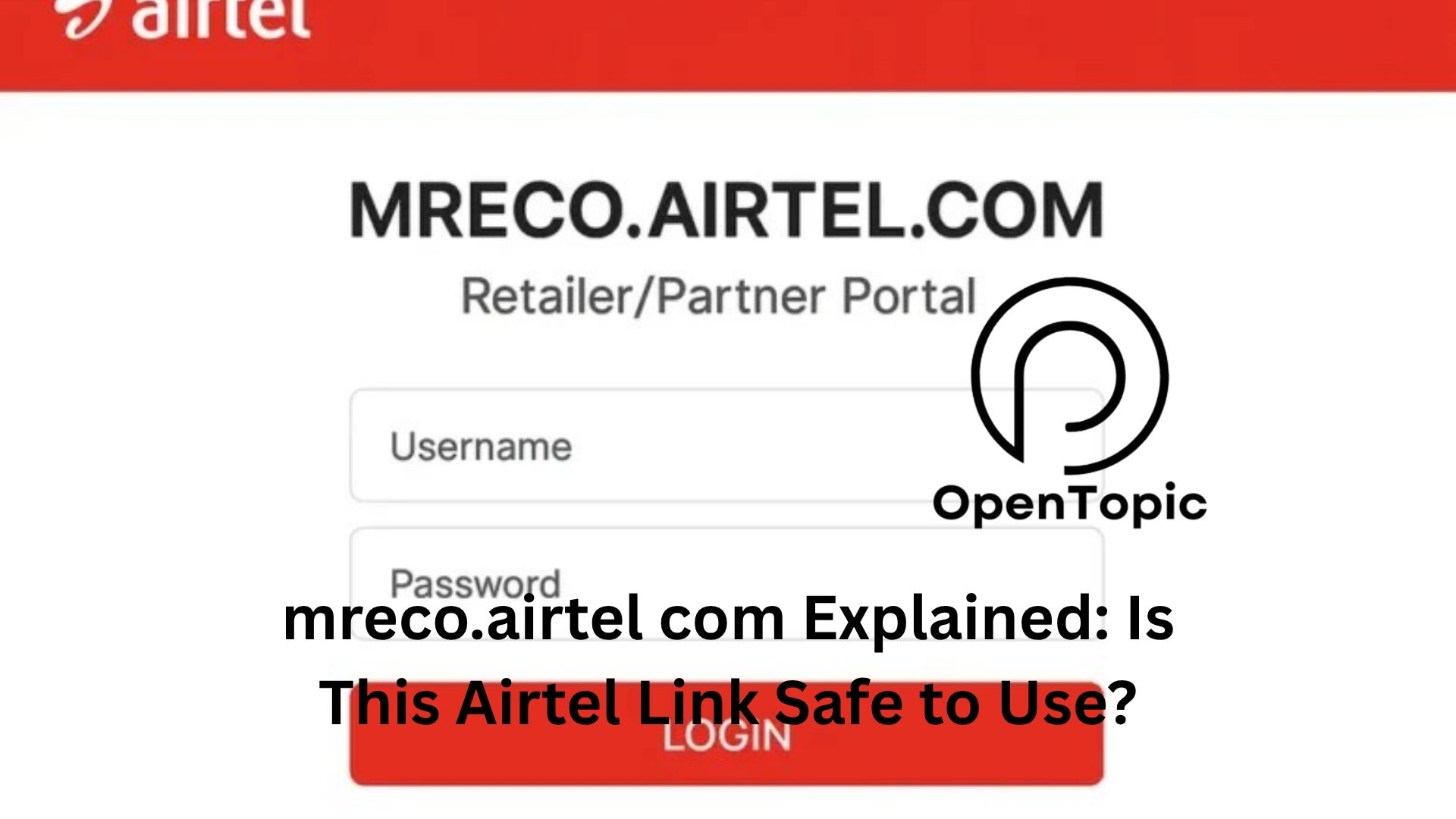
If you’ve ever checked your browser history, opened a random Airtel link, or noticed a strange URL while using Airtel services, there’s a good chance you’ve seen mreco.airtel com pop up somewhere.
And honestly, the first reaction for most people is confusion.
It doesn’t look like a normal website. There’s no flashy homepage. No clear explanation. Just a technical-looking address that raises questions. Some users even assume it’s suspicious because the name sounds unfamiliar.
But here’s the thing — mreco.airtel com is usually connected to Airtel’s internal systems and recommendation services. It’s not some random website floating around the internet. In many cases, it appears when Airtel is handling personalized content, recharge suggestions, account recommendations, or backend service routing.
That still sounds vague, though. So let’s break it down in plain English.
Why people notice mreco.airtel com
Most users don’t type this address manually.
They stumble onto it accidentally.
Maybe while opening the Airtel Thanks app. Maybe during a recharge. Sometimes it appears during redirects when clicking promotional links or account-related notifications.
A pretty common scenario looks like this:
You tap an Airtel recharge offer from SMS or email. For a split second, the browser shows “mreco.airtel.com” before taking you to the final page. That tiny redirect is enough to make people curious.
And fair enough. The internet has trained us to be cautious.
The confusing part is that Airtel uses multiple subdomains for different internal purposes. Some are customer-facing. Others work quietly in the background. “mreco” appears to be one of those backend-oriented systems.
What “mreco” likely stands for
While Airtel hasn’t publicly explained every technical detail behind the URL, many telecom systems use shortened naming formats internally.
“MReco” is commonly interpreted as:
- Mobile Recommendation
- Marketing Recommendation
- Merchant Recommendation
- Machine Recommendation engine
The exact meaning may vary depending on how Airtel uses the system internally. But the general idea stays pretty consistent: it’s connected to recommendations, targeting, offers, or service personalization.
That sounds more complicated than it really is.
Think about how streaming apps suggest movies you might like. Telecom companies do something similar with recharge packs, data plans, roaming offers, and upgrades.
If you recharge with a data-heavy plan every month, Airtel’s systems may recommend a slightly larger pack next time. If you travel often, roaming packs may show up more frequently.
That recommendation process often runs through internal service domains like this one.
Is mreco.airtel com safe?
This is probably the biggest question people ask.
In most situations, yes — if the URL is genuinely part of Airtel’s domain structure.
The important detail is the ending: airtel.com.
Cybersecurity experts usually tell people to check the root domain first. Scammers often create fake addresses that look close to real ones. Something like:
- airtel-offers.net
- airtelpromo.co
- airtel-security.xyz
Those are very different from an official subdomain ending in airtel.com.
So if you see mreco.airtel.com, it’s generally associated with Airtel’s official infrastructure.
Still, caution matters online. Always.
If a page asks for sensitive information unexpectedly, double-check before entering passwords, OTPs, or payment details. Even legitimate domains can sometimes be spoofed visually through fake ads or phishing messages.
A quick rule that works surprisingly well:
If you reached the page naturally through the Airtel app or official communication, it’s usually fine. If a random WhatsApp message pushed you there with urgency and pressure, slow down and verify first.
Why telecom companies use hidden-looking domains
A lot of people expect websites to look clean and readable.
Something simple like:
“offers.airtel.com”
But large telecom companies operate huge digital ecosystems behind the scenes. They use separate domains and subdomains for different functions:
- Payments
- Authentication
- Recommendations
- User tracking
- Content delivery
- Analytics
- Device management
Some of these names look technical because they’re built for systems, not for humans.
And let’s be honest — telecom infrastructure isn’t exactly designed with elegance in mind.
One internal naming decision made years ago can stay active forever because changing it might break dozens of connected services.
That’s why strange URLs are common not just with Airtel, but with banks, streaming platforms, ecommerce apps, and even government websites.
Why it sometimes appears during recharge offers
This part actually makes sense once you connect the dots.
Airtel heavily personalizes recharge experiences now.
Two users opening the same app may see different recommendations entirely.
One person gets:
“2GB/day + OTT benefits”
Another gets:
“Weekend rollover data pack”
That personalization usually depends on usage patterns, recharge history, region, device type, and account activity.
Systems like mreco.airtel com may help process or route those recommendations before the final page loads.
You can think of it like a traffic controller sitting between your request and Airtel’s main interface.
Not glamorous. But useful.
Some users mistake it for malware
This happens more often than you’d think.
People notice unfamiliar URLs in browser history and immediately assume their phone is infected.
To be fair, that reaction isn’t irrational anymore. Phones do get redirected by malicious apps sometimes.
But there are a few signs that usually separate legitimate telecom domains from actual malware activity.
If the URL:
- appears briefly during official Airtel activity,
- doesn’t force strange downloads,
- doesn’t trigger pop-up spam,
- and stays within Airtel’s domain structure,
then it’s usually part of Airtel’s normal backend operation.
Real malware tends to behave aggressively. Random redirects. Fake warnings. Forced installs. Constant ads. Suspicious permissions.
A harmless backend recommendation service typically doesn’t do any of that.
Why the page sometimes doesn’t load properly
Here’s something people notice a lot:
They manually type “mreco.airtel com” into a browser and get either a blank page, an error, or something incomplete.
That’s actually normal.
Not every subdomain is meant to function as a standalone public website.
Some work only when triggered by specific app actions, authenticated sessions, API calls, or internal redirects.
Imagine opening the backstage door of a theater and expecting a ticket counter. That’s basically what happens here.
The system exists. It’s active. But it may not be designed for direct browsing.
Airtel’s growing focus on personalization
Telecom companies have changed a lot over the last decade.
Earlier, recharge systems were simple:
Choose a pack. Pay. Done.
Now it’s layered with recommendations, entertainment bundles, rewards, cashback, OTT integrations, and targeted offers.
Airtel competes aggressively in a market where users constantly switch between plans and providers. Personalized recommendations help keep users engaged.
That’s probably why systems like mreco.airtel com exist in the first place.
And honestly, whether people like it or not, almost every major digital platform works this way now.
Netflix recommends shows.
Amazon recommends products.
Spotify recommends songs.
Telecom companies recommend plans.
Same basic logic.
Can you block or avoid it?
Technically, maybe. Practically, there’s usually no reason to.
Some advanced users block tracking or recommendation-related domains using browser filters or private DNS services. But doing that can occasionally interfere with app functionality or offer loading.
For the average Airtel customer, the domain itself isn’t something that needs active management.
What matters more is maintaining good digital habits overall:
- Use official apps
- Avoid suspicious links
- Keep your phone updated
- Don’t share OTPs
- Verify payment pages carefully
That protects you far more effectively than worrying about one backend subdomain.
A quick reality check about online privacy
Now, this is where opinions differ.
Some users are perfectly fine with personalized recommendations. Others find them intrusive.
Both views are understandable.
Telecom providers collect usage data to improve services and market plans more effectively. That’s standard across the industry now. Recommendation engines are part of that ecosystem.
The bigger question isn’t whether mreco.airtel com exists.
It’s how comfortable people are with personalized digital systems in general.
Most modern apps already operate on similar models. Telecom platforms are simply catching up to what social media and ecommerce companies have done for years.
What to do if something feels suspicious
Even though the domain itself is generally associated with Airtel, trust your instincts if behavior seems off.
A few warning signs deserve attention:
- requests for unusual permissions,
- repeated forced redirects,
- fake reward claims,
- urgent “account blocked” messages,
- unexpected APK downloads,
- or pages asking for banking details outside official payment flows.
If that happens, don’t continue blindly.
Open the official Airtel Thanks app directly instead of using the suspicious link. You can also contact Airtel customer support through verified channels.
One small habit helps a lot:
Instead of clicking links from SMS messages immediately, open the official app manually and navigate from there.
Simple. Effective.
The reason this topic keeps trending
People are naturally curious about things they don’t recognize online.
Especially when those things appear connected to mobile accounts, payments, or telecom providers.
Searches for “mreco.airtel com” usually come from users trying to answer one basic question:
“Is this legit or not?”
And that’s a reasonable thing to check.
The internet is crowded with scams, fake redirects, phishing pages, and cloned websites. Being careful isn’t paranoia anymore. It’s common sense.
At the same time, not every strange-looking URL is dangerous. Some are simply part of the hidden machinery running modern digital services behind the curtain.
mreco.airtel com appears to fall into that category for most users — an internal or recommendation-related Airtel domain that occasionally becomes visible during normal service use.
Not exciting. Not particularly user-friendly. But probably far less mysterious than it first appears.

Hannan Sid is a passionate content creator and digital researcher specializing in emerging trends, technology, and online insights. He writes clear, engaging articles that simplify complex topics for everyday readers. His work focuses on delivering valuable, up-to-date information, helping audiences stay informed, inspired, and ahead in the fast-changing digital world.